Blog

We are an export-oriented manufacturer with 14 years of expertise in grandstand chair production, offering OEM/ODM services to global brands and distribution partners.

Share

One-Shoulder Carry, Zero Excuses: Portable Seats That Actually Get Used

Picture a very realistic scenario: a family of four drives to a sports stadium, their trunk packed with a picnic blanket, water bottles, and jackets for the kids. Before leaving, the dad briefly considered bringing along two folding stadium seats, but after lifting them and realizing his hands would be completely occupied, he sighed and tossed them back in. Once in the stands, the family sat on hard, cold bleachers; by halftime, their backs were already aching, yet there was nothing to be done about it.

It isn’t a matter of price—these seats likely sell for just a few dozen dollars. Nor is it a lack of awareness; plenty of people have searched online for “stadium seats for sale.” The real deterrent is the trek from the trunk to the stands. The logistics of actually *carrying* them are simply too much of a hassle. If a portable stadium chair requires you to carry it in your hand the whole time—without the option to sling it over your shoulder or tuck it into a bag—most people will rarely use it. If spectators don’t buy in, retailers can’t move the product.

For merchants, if the product selection process focuses solely on seating comfort while overlooking portability, that stadium seat with back support is likely to gather dust on the shelves. After all, whether in a store or browsing online, consumers instinctively weigh the question: “Would I actually be willing to carry this thing around?”

The Distance between the Parking Lot and the Stands Is Enough to Deter Most People

Picture a realistic scenario: a family of four drives to the stadium with a picnic blanket, a few bottles of water, and the kids’ jackets in the trunk. Before leaving, the dad briefly considers bringing along two folding stadium seats, but after lifting them and realizing his hands would be completely occupied, he sighs and tosses them back in. Once in the stands, the family sits on hard, cold bleachers; by halftime, their backs are aching, but there is nothing to be done about it.

It isn’t a question of price—these chairs might only cost a few dozen dollars. Nor is it a lack of awareness—many people have searched online for “stadium seats for sale.” The real sticking point is the trek from the trunk to the stands. The act of actually *carrying* them is simply too much of a hassle. If a portable stadium chair requires you to carry it by hand the whole time—without the option to wear it as a backpack or stow it in a bag—most people will find it inconvenient to use, and usage rates will drop. Consequently, people won’t buy them, and merchants won’t be able to sell them.

For merchants, if the product selection process focuses solely on seating comfort while overlooking portability, a stadium seat with back support might well end up a slow seller. After all, whether in a store or browsing online, consumers subconsciously ask themselves: “Would I actually be willing to carry this thing around?”

Switching from "Carrying by Hand" to "Wearing on the Back" Changes the Mindset

Bringing a chair to the stadium essentially involves a mental calculation of the effort-to-reward ratio. Spectators subconsciously weigh the options: is the comfort of sitting for three hours worth the forty minutes of carrying the chair back and forth? If the answer is “not really,” even the best stadium chair cushion won’t sell.

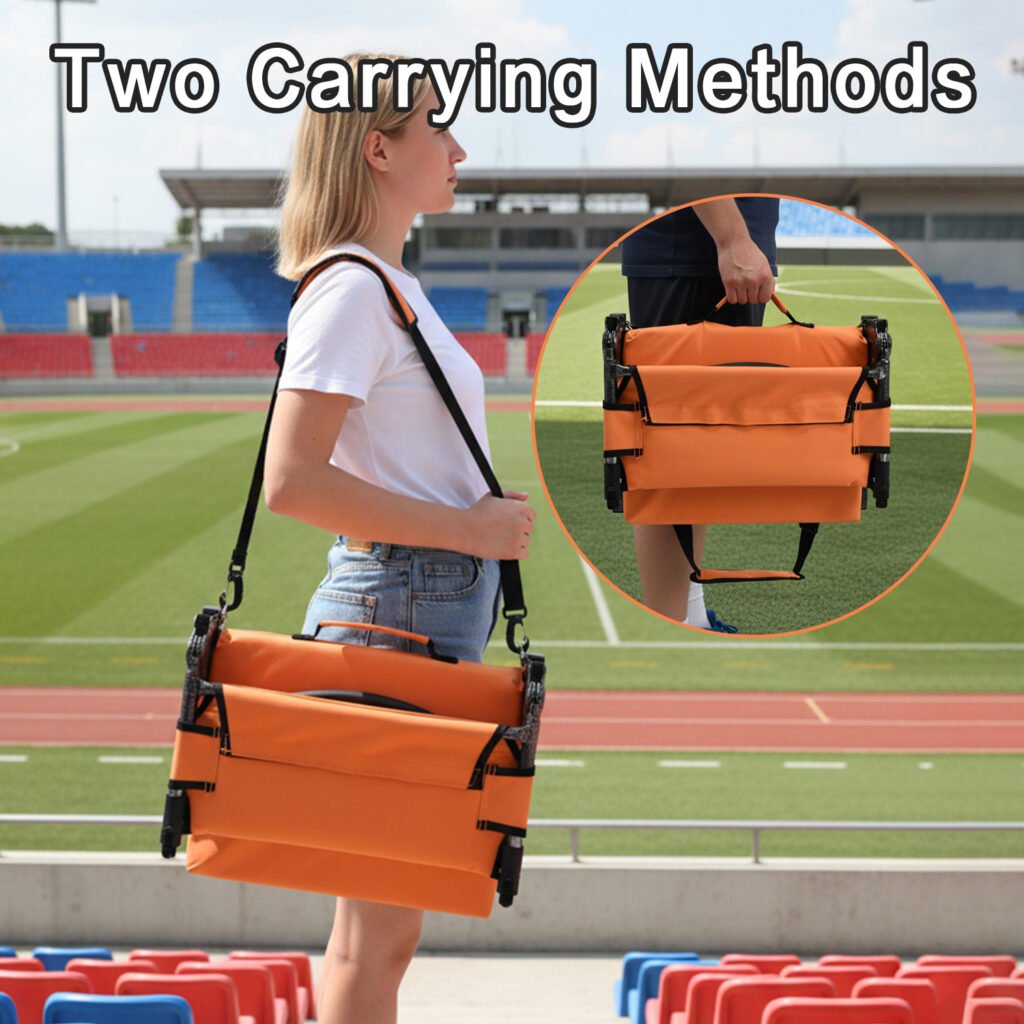
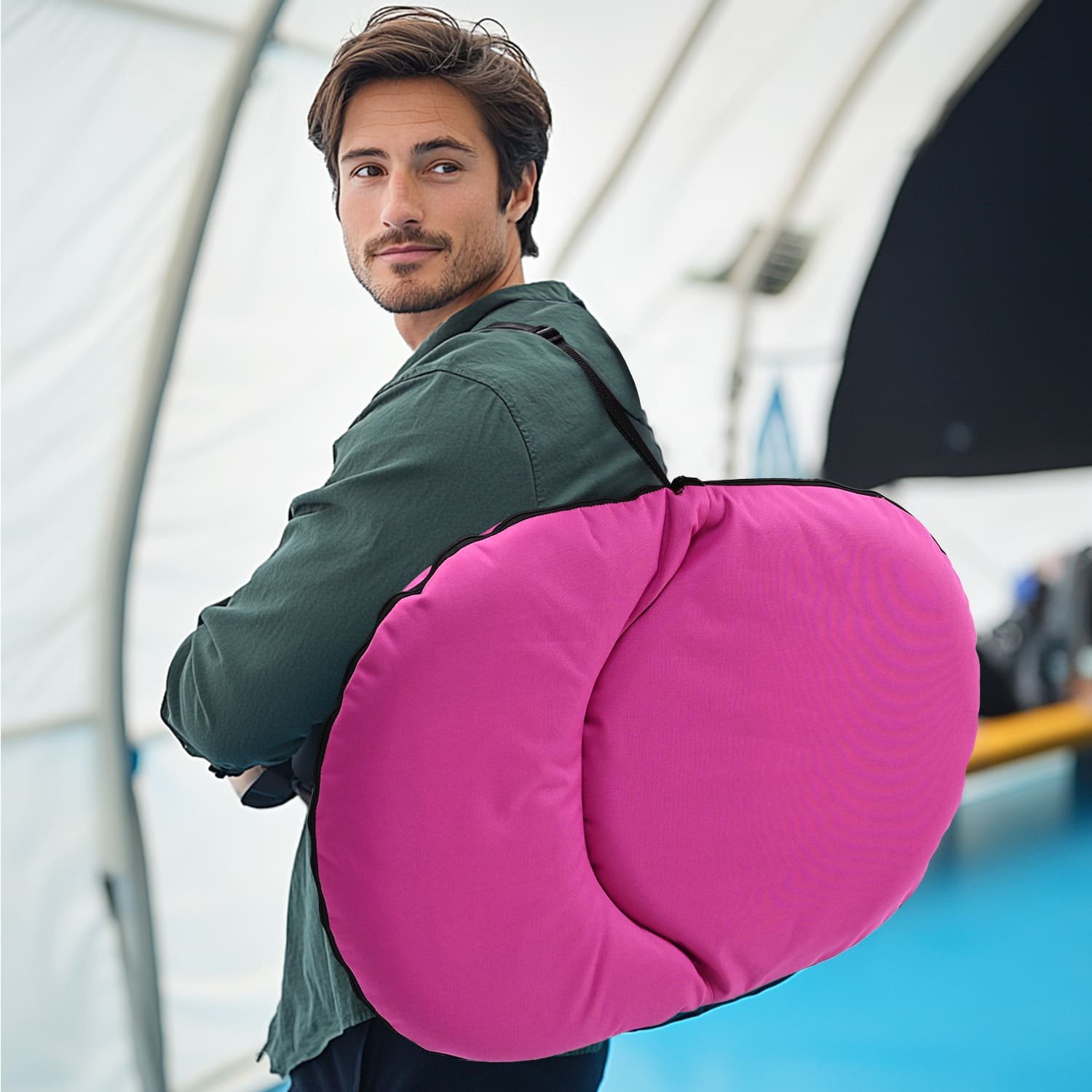
However, the situation changes completely if the carrying method shifts from “hand-carrying” to “wearing on the back.” Imagine a chair that folds down to the size of a backpack; you simply sling the straps over your shoulders, leaving your hands completely free to handle tickets, hold a child’s hand, or carry a coffee. On the walk from the parking lot to the stands, it ceases to be a burden and becomes as natural an accessory as a personal bag. This is why stadium chair backpacks—or portable stadium chairs with adjustable straps—make it much easier for consumers to decide to give them a try.

Simply put, lowering the barrier to portability means spectators no longer view “bringing a chair” as something requiring special planning. When the act of slinging it on and heading out becomes so simple it requires no thought, the potential use cases truly open up. Retail conversion rates at sporting goods stores often see a quiet boost thanks to designs that allow people to head out without a second thought.

stadium chair with back
padded seats for bleachers

The Issue That Gives Merchants the Biggest Headache: Why Customers Pick Up an Item Only to Put It Back Down

In sporting goods or gear retail stores, a common scene plays out: a customer picks up a stadium chair, unfolds it to test the seat, gives a nod of approval, hefts it to gauge the weight, and then puts it back. While a salesperson might assume the price is the sticking point, the real reason often lies in that “hefting” action—it is simply too heavy, making it too tiring to carry around.

This is a case of “weight-induced rejection.” No matter how comfortable a padded stadium seat is, if the weight makes a customer’s arm ache while still in the store, the sale is essentially lost. Conversely, products that can be easily carried with one hand—or slung over a shoulder without digging in—enjoy much higher trial-to-purchase rates. Lightweight stadium chairs have become increasingly important to outdoor retailers precisely because they solve this “last-minute put-back” problem.

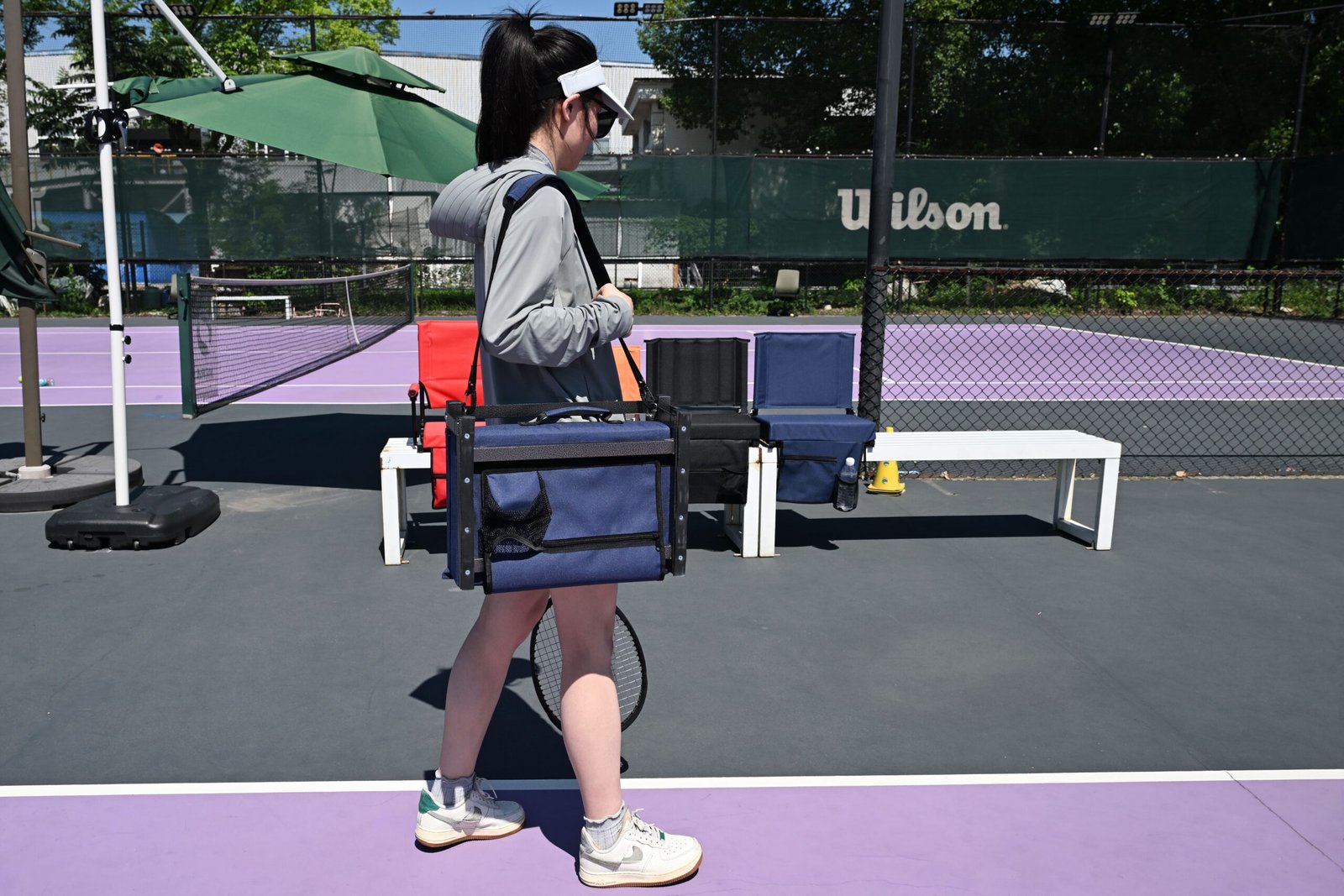
So, how can retailers convey this sense of effortless portability in-store or on product pages? Try this: move beyond static photos of the chair fully set up. Instead, show images of someone walking while carrying a folded, collapsible stadium chair in one hand, or a fan navigating a crowd with a stadium chair backpack. Help buyers visualize—before they even pay—just how easily they can carry the chair into the stadium.

Three Details That Make Portability Easier

Transforming a product from “hard to carry” to “easy to grab and go” doesn’t rely on some “black-box” high-tech innovation; rather, it comes down to a few seemingly ordinary details executed correctly. Wholesale distributors of stadium seats can use these three points as hard criteria when selecting products:

Folded volume and shape. If a folding stadium seat remains bulky or sprawled out after folding—and cannot stand on its own—it becomes a space-hogging nuisance in a car trunk. A good folding design is compact and self-supporting; it can stand upright in a corner or fit into a narrow gap in the trunk without wasting space. This is also why the folded form directly impacts retail display efficiency—after all, store shelves rely on maximizing space utilization.

Strap quality: “Carryable” vs. “Comfortable to carry.” Many products claim to have a strap, but if it’s thin and short, it digs into the shoulder, making it unbearable after just a few steps. A truly well-designed stadium chair (whether a backpack style or one with an adjustable shoulder strap) features a wide, length-adjustable strap that doesn’t leave painful marks after ten minutes of carrying. Customers can test this detail the moment they try it on in the store; comfort is immediately apparent and can’t be faked.

Weight threshold for one-handed carrying. This doesn’t mean the chair needs to be so light it feels insubstantial—if it’s too light, it won’t be stable and could blow away in the wind. Instead, the goal is to maintain the structural integrity of the steel frame while keeping the total weight manageable for women or older fans to carry easily. Powder-coated steel tubing provides the framework, but smart design ensures balanced weight distribution, making it easy to carry without requiring significant physical exertion. That is the true balance of design in portable stadium chairs.

When these three details are executed well, customers get a feel for the product the moment they pick it up or sling it over their shoulder in the store. Retailers don’t need to say much; the product itself clearly communicates, “I am easy to carry.”

Product Selection Strategy for Sales Channels

For wholesalers, cross-border e-commerce sellers, or distributors supplying stadium fan shops, “portability” should be evaluated as a distinct criterion during product selection rather than being glossed over as a mere subset of “functionality.” To determine whether a stadium seat will sell well, one can simply ask three questions:

How do customers react when they first pick it up in the store? If they frown, switch hands, and then put it down, the product is likely to suffer from high retail return rates and sluggish inventory turnover. Conversely, if a customer can easily lift it with one hand—or even immediately sling the strap over their shoulder to try it on—the conversion rate is likely to be strong. Buyers in the stadium chair wholesale market would do well to perform this action themselves during the trial order phase.

Does the folding mechanism suit a fast-paced lifestyle? A modern fan’s game-day routine involves parking, walking, watching the game, walking back, and driving away—there is no room for the hassle of slowly packing up a chair. Features like one-step collapsing or rapid folding align perfectly with this pace. Retailers can demonstrate this directly: transforming the seat into a backpack in under ten seconds is a visual that is far more persuasive than any list of specifications.

Is there room for customization? Many venues and fan groups want custom or personalized stadium seats featuring team logos or season slogans. If a supplier offers OEM/ODM, private-label services, or even patent licensing, the retailer is selling more than just a chair; they are offering a vehicle for branding. This is a highly attractive selling point in markets with a strong fan culture.

A Factory That Embodies the Concept of "Lightweight Portability"

“Lightweight and portable”—these words are easy to say, but realizing them requires meticulous attention to detail at every stage of the production line. The frame must be sturdy yet lightweight; the folding mechanism smooth yet secure; the straps comfortable without adding bulk. Achieving this balance relies on experience honed through repeated refinement on the factory floor, not just a set of blueprints.

Changzhou Canbo Travel Products Co., Ltd. has extensive experience in manufacturing portable stadium seats. Based in Changzhou, we operate a facility spanning over 20,000 square meters with five production lines and a workforce of more than 200 employees. We hold ISO 9001 and BSCI certifications, and our products are CE-certified and protected by design patents. We mention this not merely to list credentials, but to emphasize a point: the user experience—easy to carry, smooth to fold, and comfortable to wear—is no accident. It is the result of rigorous quality control across every step of the process, from raw material cutting and steel tube bending to foam molding, sewing, and final assembly.

We use powder-coated iron tubing for the frame, ensuring strength without excessive weight. High-resilience foam in the seat and backrest resists flattening during prolonged use yet compresses tightly when folded to save space. The PVC-coated Oxford fabric is dirt-resistant and easy to clean; a quick shake sheds rainwater instantly. Wide, adjustable straps ensure the product truly lives up to the name “stadium chair backpack.” We offer options ranging from breathable Textilene fabric for hot weather to heated models for cold days. We also provide full customization services for bleacher seats and supply replacement parts.

Whether you are selecting a flagship wholesale stadium seat for a fan shop or looking to add a “grab-and-go” SKU to your outdoor brand lineup, we invite you to start the conversation with a sample. A chair that eliminates the hassle of transporting gear from the car trunk to the stands could well become your store’s best-selling item next season.

Contact Us

We look forward to hearing from you

en_USEnglish