Blog

Tribün koltuğu üretiminde 14 yıllık uzmanlığa sahip, küresel markalara ve dağıtım ortaklarına OEM / ODM hizmetleri sunan ihracat odaklı bir üreticiyiz.

Paylaş

Portable Seat Cushions for Hot & Cold Bleachers

When it comes to stadium seating, the materials are almost always the same: metal or concrete. Both share a common physical characteristic—they conduct heat rapidly. In summer, the sun can make metal bleachers hot enough to fry an egg, while in winter, concrete steps become bone-chillingly cold. For spectators, comfort is the last thing on their minds; simply managing to stay seated for half an hour requires serious willpower. While the solution seems simple—just add a cushion—this issue often gets lumped into the vague category of “comfort” during procurement, rather than being treated as a distinct, critical factor. Consequently, many purchased cushions lack sufficient thickness or thermal insulation, inevitably leading to poor feedback from end-users. This article explores the importance of thermal insulation in stadium seating and explains why it deserves to be treated as a standalone performance metric.

Metal and Concrete—A Hot Plate in Summer, an Ice Block in Winter

Anyone who has sat on them understands the issues with the materials used for stadium seating. Metal stadium seats, when exposed to the sun for hours, reach surface temperatures far higher than the ambient air; the surface is too hot to even touch—let alone sit on. Concrete bleacher seats are hardly better; while they absorb heat slowly, they also release it slowly, retaining warmth long after the sun goes down, making them feel stifling and unbreathable to sit on.

In winter, the situation reverses. Metal stadium seats feel freezing to the touch, while concrete bleachers feel so cold the chill seems to seep right into your bones. Even when spectators sit on them wearing thick coats, body heat is rapidly conducted away, leaving the lower body feeling cold after just a short while. This isn’t a matter of being fussy; it is determined by the thermal conductivity of the materials themselves, regardless of whether the venue is new or well-maintained.

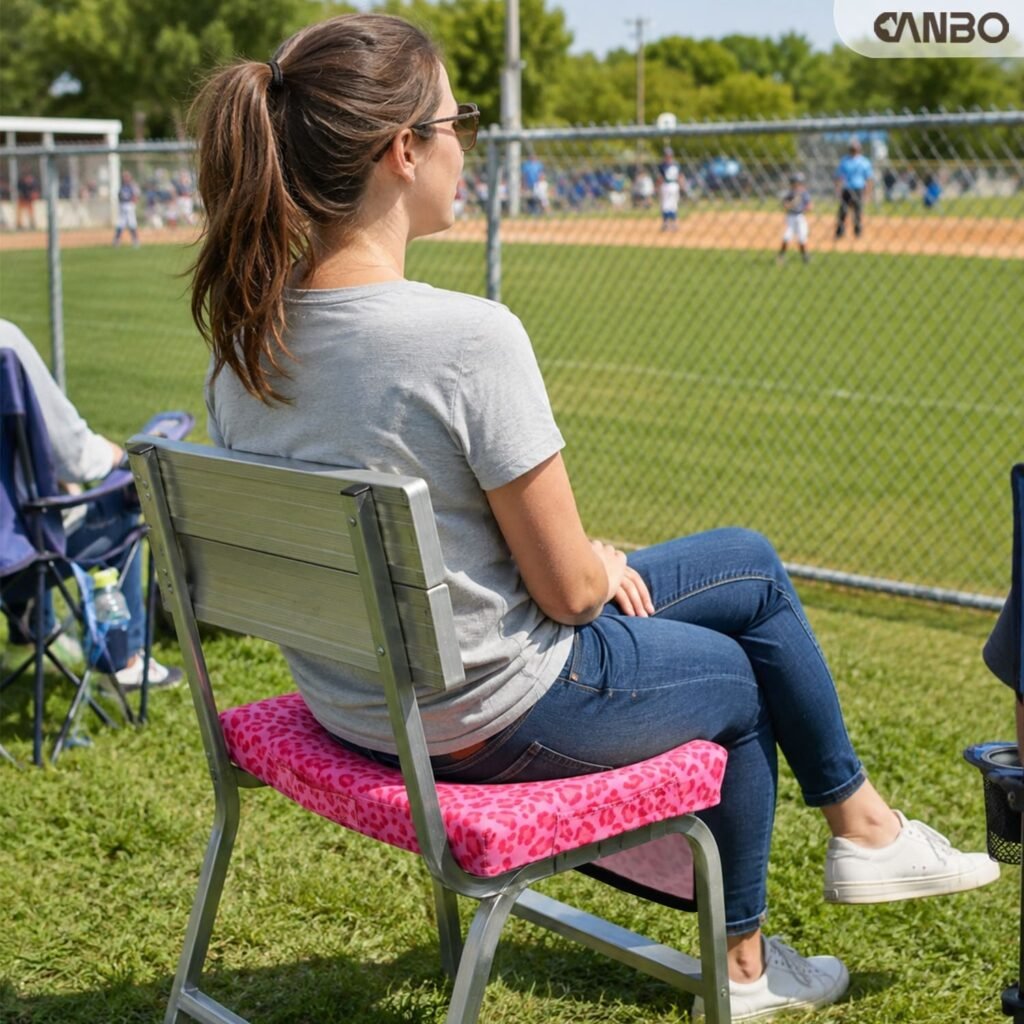
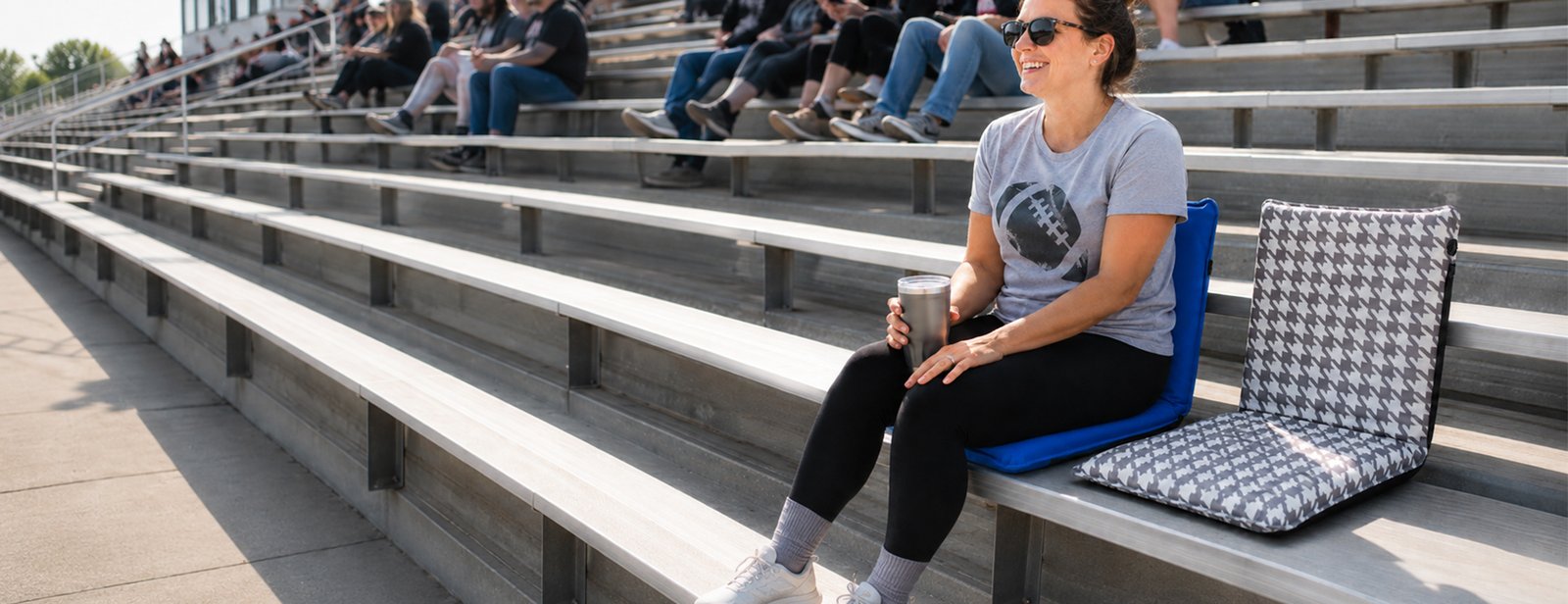
Therefore, a good stadium seat cushion needs to be more than just “soft”; its primary function is to act as a thermal barrier, separating the body from those scorching or freezing surfaces. If a cushion is too thin, it fails to provide effective insulation against heat or cold, making the experience little different from sitting directly on the bare stadium seating.

In Procurement, Insulation Gets Swallowed by "Comfort"

During the product selection process, many dealers and distributors evaluate stadium chair cushions using a broad concept of “sitting comfort”—a catch-all metric that encompasses firmness, backrest angle, fabric texture, and thermal insulation. However, when these factors are lumped together, the specific performance of thermal insulation becomes difficult to assess in isolation.

Consequently, buyers often select products that feel soft and look thick but offer only mediocre thermal insulation. While “thick stadium seats” sounds appealing, thickness does not equate to effective insulation; one must consider thermal conductivity, thickness, and surface area in tandem. Some padded stadium seats utilize low-density filling that appears substantial but compresses flat upon use, effectively eliminating the insulating layer.

End users do not analyze material specifications; they simply report that “the cushion still feels cold” or “it gets scorching hot after sitting for a while in summer.” When this feedback reaches the purchasing team, it is often dismissed with the notion that “you get what you pay for,” rather than being recognized as a failure to specifically evaluate thermal insulation performance. For wholesalers of stadium seats, this represents a frequently overlooked yet critical factor in decision-making.

avcılık için ısıtmalı koltuk minderleri

Material, Thickness, Coverage—All Three Have to Be Counted Together

From a product design perspective, providing insulation against cold or heat involves more than just stuffing in some random foam. A material’s thermal conductivity determines the rate of heat transfer, its thickness dictates the level of thermal resistance, and the coverage area determines how much of the body is protected. If any of these three factors is lacking, performance suffers.

Regarding materials, EVA foam and high-density foam each have distinct characteristics. EVA foam features a closed-cell structure that offers excellent water and heat insulation, making it ideal for the base layer; high-density foam offers good resilience and comfort, making it suitable for the top layer. High-quality stadium seat cushions often utilize a combination of materials rather than just one. For instance, padded stadium seats filled with high-resilience foam provide firm support when sat upon, while the foam’s density simultaneously offers a degree of thermal resistance.

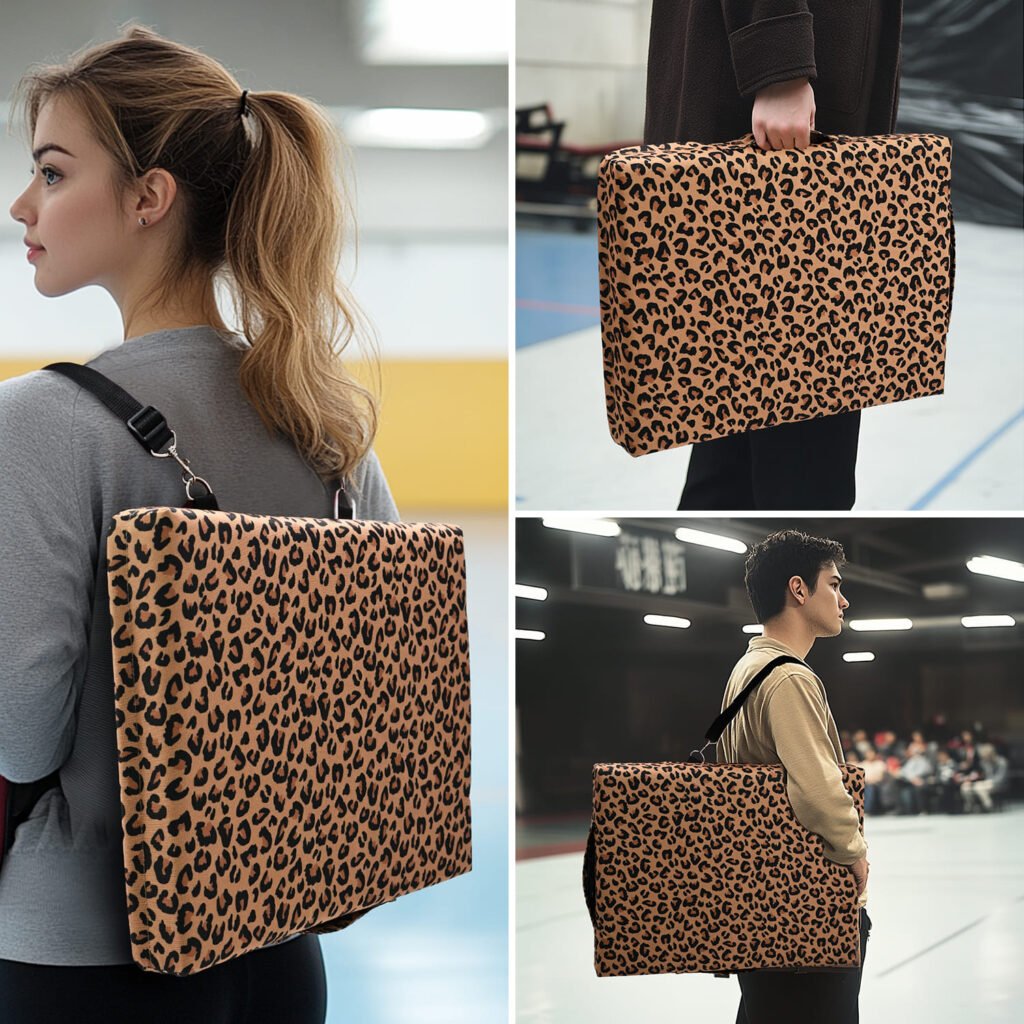
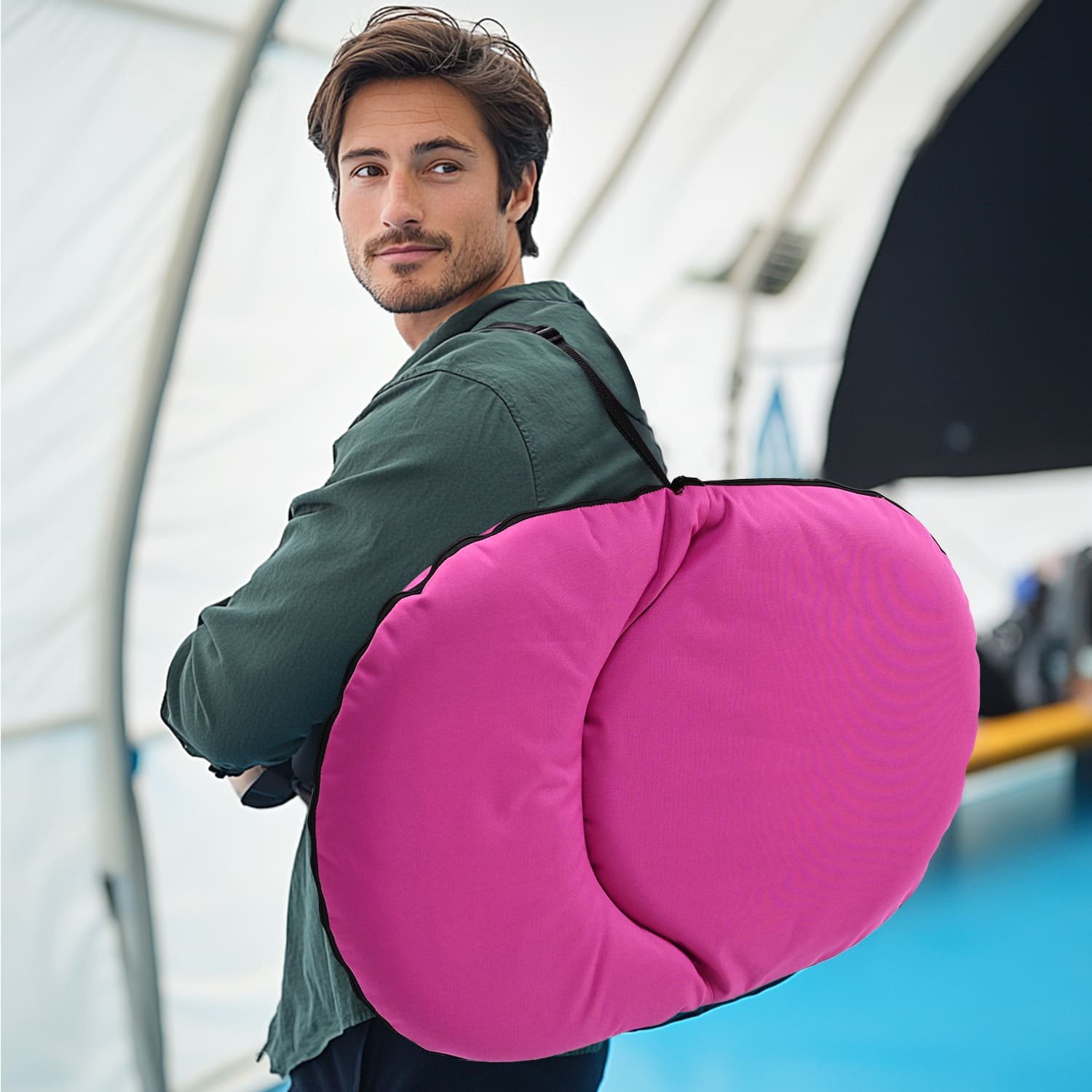
Thickness and coverage area must be tailored to the specific usage environment. Open-air stadiums in North America face scorching summer sun and biting winter winds, while European soccer stadiums often contend with long rainy seasons and low temperatures. In these scenarios, if a bleacher cushion is too thin or covers too small an area—protecting only the center of the buttocks—its insulating effectiveness will be severely limited. While the trend toward thicker stadium cushions is the right direction, a balance must be struck between thickness and portability; otherwise, the product becomes too heavy for users to want to carry.

In Cold Markets, Winter Demand Can Be Even Harder Than Summer

For buyers targeting markets in the cold regions of North America and Europe, the need for warmth during winter sporting events can actually outweigh the need for heat insulation in summer. This is no exaggeration: the American football season extends into late autumn and early winter, while European soccer leagues play throughout the winter, often with matches held in open-air stadiums where temperatures hover near freezing.

In such conditions, the cold-insulation capability of a portable seat cushion directly determines whether spectators can remain seated comfortably. Standard foam cushions tend to harden in freezing temperatures, losing their resilience and insulating performance. What is needed instead is higher-density, thicker padding—or even a heated model. Heated stadium seats (or padded seats with integrated heating elements) are gaining increasing attention in markets across Europe, North America, Japan, and South Korea.

Another often-overlooked factor is condensation on stadium seating. Metal surfaces are prone to forming dew in low temperatures; if a cushion lacks a waterproof exterior, moisture can seep in, intensifying the sensation of cold. In this context, waterproof stadium seat fabrics serve a dual purpose: protecting against rain and blocking the damp chill that rises from the seat surface. A combination of Oxford fabric and a PVC coating effectively blocks moisture while withstanding the risk of becoming brittle in the cold.

Treat Insulation as Its Own Metric, and Sourcing Gets Clearer

If buyers treat thermal insulation (protection against cold and heat) as a standalone functional metric rather than merely an aspect of “comfort,” their product selection decisions will be far more rational. Specifically, they should evaluate factors such as whether the material structure is composite, the residual thickness under compression, the extent of surface coverage, and whether the fabric is waterproof and moisture-resistant.

These metrics do not require laboratory data; they can be assessed as soon as a sample is in hand. Simple, practical tests—such as placing a cup of hot water beneath the stadium seat cushion and checking the surface temperature after a few minutes, or freezing the sample and sitting on it to gauge the feel—offer more intuitive insights than a spec sheet. Such hands-on testing is particularly crucial for wholesale stadium seat procurement; when dealing with large volumes, substandard thermal insulation can lead to prohibitive costs and time losses associated with returns or exchanges.

Stadium seating suppliers who proactively provide thermal insulation test data or details on material composition are viewed as more professional by dealers and distributors. While this does not involve highly complex technology, a supplier willing to highlight this aspect usually demonstrates a deeper understanding of their product. If a stadium seat factory can collaborate with clients to produce comparative samples featuring different thicknesses and materials, the product selection process becomes significantly more efficient.

From the Changzhou Production Line, Insulation Built into Every Layer

Thermal insulation—keeping the cold out and the heat in—is a concept rooted in physics, but in practice, it comes down to material selection and structural design. When manufacturing portable seat cushions for sporting events, the ability to deliver effective insulation truly tests a factory’s understanding of materials and production processes.

Changzhou Canbo Travel Products Co., Ltd. has been manufacturing portable bleacher seats and cushions in Changzhou for years. Our facility spans over 20,000 square meters, featuring five production lines and a workforce of around 200 employees; we hold ISO 9001 and BSCI certifications, and our products are CE certified. Most of our products feature patented designs. Wholesale clients visiting our factory can see PVC-coated Oxford fabric neatly stacked in the cutting workshop, high-resilience foam emerging from the production line, and powder-coated iron tube frames being shaped one by one. We control every aspect on our own lines—from the foam density of thick stadium seat cushions and the waterproof layers of seat covers to the fabric combinations used in padded seats. We mass-produce both heated and Textilene fabric models and supply replacement parts separately.

We offer extensive customization options—including color, size, fabric, and printing—to meet specific client requirements, and we are highly experienced in OEM and ODM projects. We handle significant volumes of wholesale blank stadium seats, including private label and white-label orders. Our products have been sold for years in markets across Europe, the UK, Japan, South Korea, and Australia; our client base includes cross-border e-commerce sellers, supermarket procurement teams, event organizers, and domestic platform distributors.

If you are looking for a bleacher seat that offers genuine thermal insulation performance, or if you want to add a portable seat cushion SKU to your product line that highlights insulation as a key selling point, feel free to request a sample. After all, the moment you sit down, your body knows best whether the bleacher surface is scorching hot or freezing cold.

Bize Ulaşın

Sizden haber bekliyoruz

tr_TRTürkçe