

Blog

Chúng tôi là nhà sản xuất hướng đến xuất khẩu với 14 năm kinh nghiệm trong sản xuất ghế khán đài, cung cấp dịch vụ OEM/ODM cho các thương hiệu toàn cầu và đối tác phân phối.

Chia sẻ

Ghế sân vận động có khay đựng cốc: Không chỉ dành cho đồ uống

The cup holder first appeared on stadium seats to solve a very simple problem—where to put your drink. You can’t hold it forever, and putting it on the ground risks kicking it over. Once the cup holder arrived, that problem was solved. But user needs don’t stop at “holding a drink.” Where does the phone go? The keys? The snack bag for the kids? Sunglasses, a hat, a mini fan, a power bank—add up all the little things you bring to a game and one hand can’t carry them all. So stadium seats started moving toward “being able to store things,” and the cup holder was just the starting point. This piece is about that trend—how far functional integration can go, what’s a real need, and what just looks good on paper.

The Cup Holder Solved Drinks—But You're Still Clutching Your Phone

Stadium seats with cup holder are pretty common now, but in actual use you realize the cup holder only solves part of the problem. During a game, besides a drink, you’ve got a phone, keys, snacks, sometimes a jacket. There’s only one slot, and once the drink is in it, nowhere else to go.

The stadium seat with cup holder was designed to free up one hand, but what really needs freeing is both hands. Nowhere to put the phone means clutching it the whole time or stuffing it in a pocket where it digs in. Keys in a pocket are uncomfortable to sit on, and on the ground they might get lost. These scattered needs add up and push toward functional integration—the seat can’t just have a cup holder, it needs to hold more.

Where Functional Integration Is Heading—And What's Actually Needed

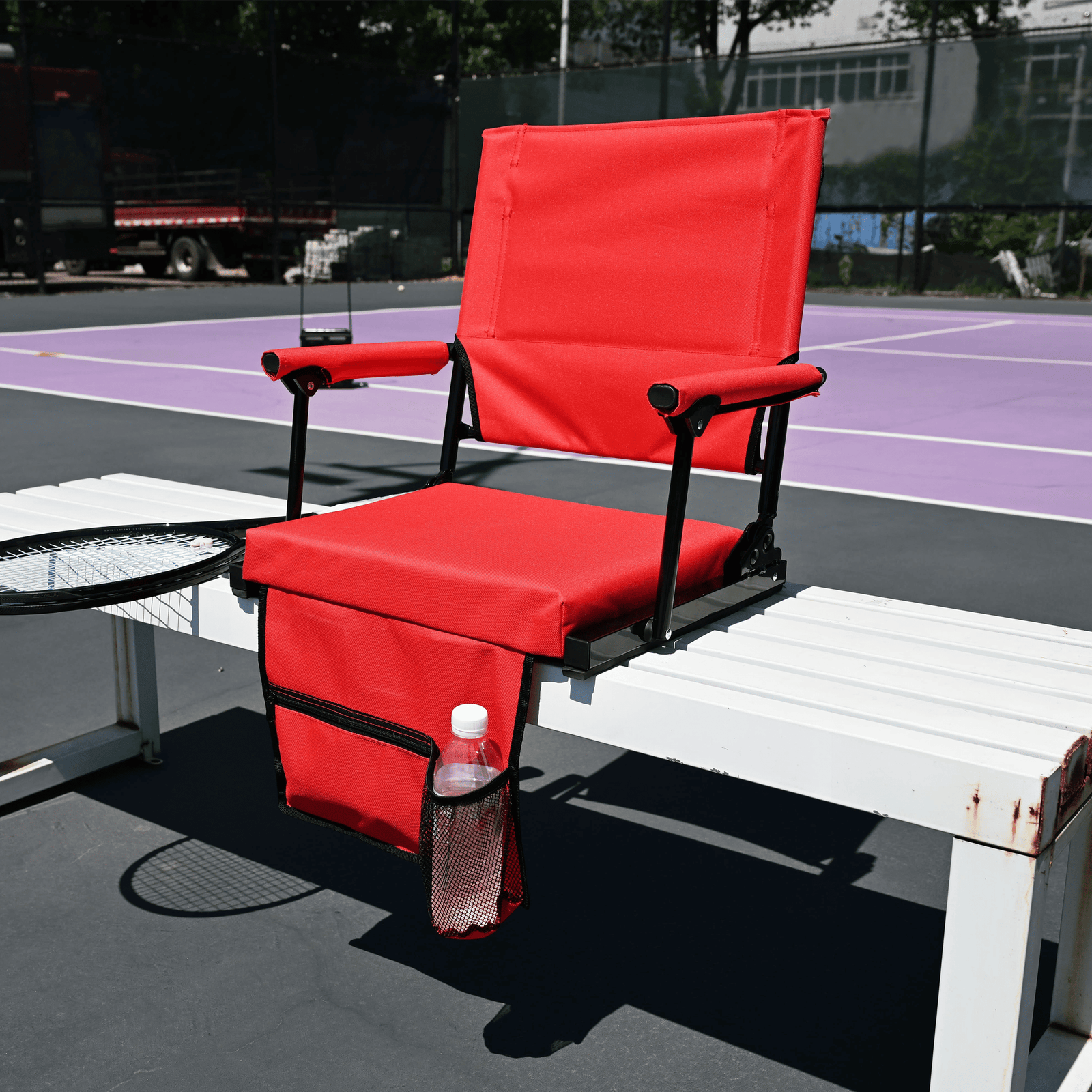
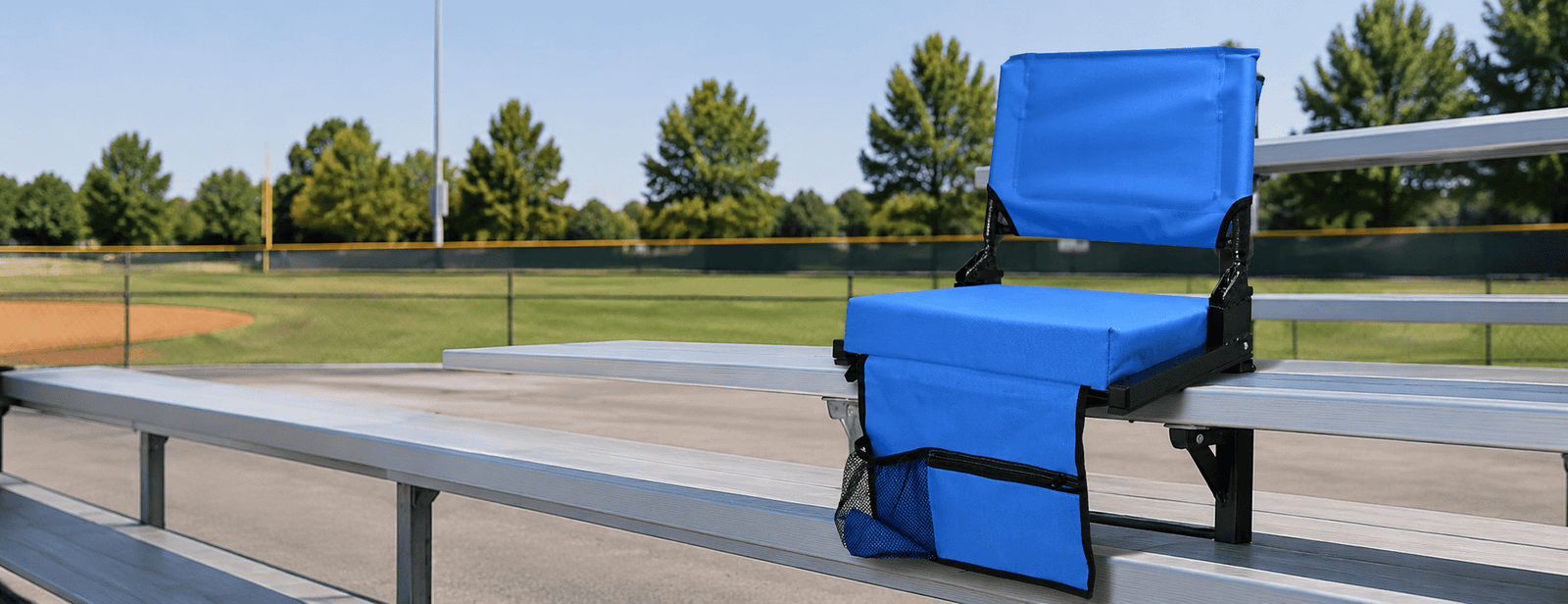
Some stadium chair with cup holder designs on the market are already moving toward integration. Beyond the cup holder, some add a phone slot, some sew a storage pocket on the side, some add a hook for keys or a small bag. Stadium seats with armrests and cup holder combos are also trying to merge armrest and storage functions.

Among these features, which are real needs? Phone slots and storage pockets get the loudest calls. Phone use during a game is frequent—shooting video, sending messages, checking scores. A dedicated spot for the phone is genuinely convenient. Storage pockets are practical too—snacks, tissues, power bank all have one place instead of digging around. Hooks and key clips are nice-to-haves. Better with them, but their absence doesn’t hurt the core experience.

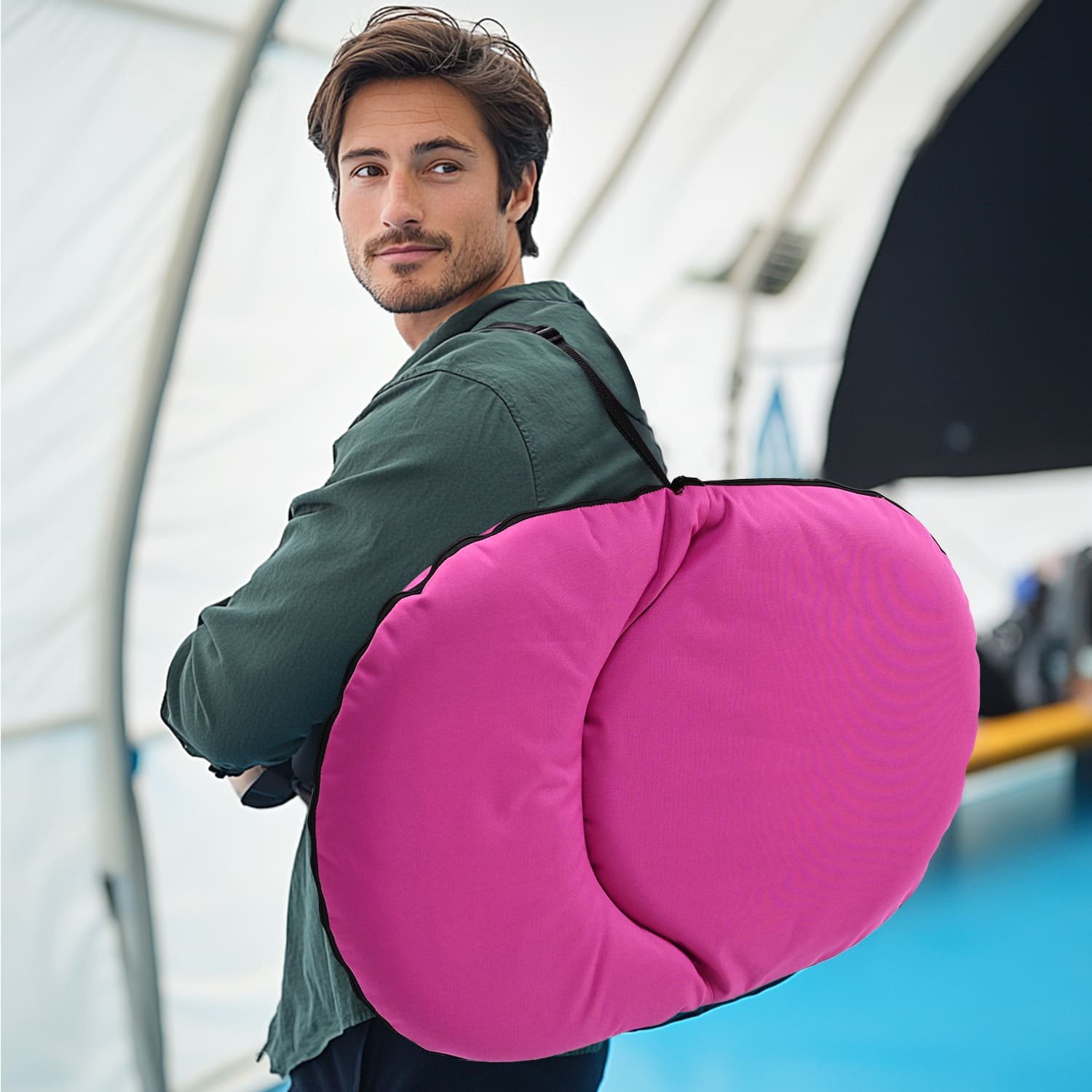
But more features isn’t better. If stadium seat with arms adds too many attachments, the structure gets complicated and weight goes up. The advantage of lightweight stadium chairs is being easy to carry. Adding weight to cram in storage features sacrifices the core selling point of portability. The boundary of functional integration is not compromising “can I bring this out.”

The More Complex the Structure, the Bigger the Cleaning and Maintenance Headache

There is an often-overlooked cost associated with feature integration: cleaning and maintenance. Stadium seat cushions are naturally prone to spills and snack crumbs; adding various crevices, pockets, and hooks exponentially increases the difficulty of cleaning them.

A simple stadium seat cup holder can be rinsed and dried in moments. However, if you add slots for phones, storage pouches, or zippered compartments, these nooks and crannies trap dirt and grime, making cleaning a hassle for the user and ultimately degrading the experience over time. This makes a removable, washable cover design particularly important. If the fabric itself is waterproof and moisture-resistant—suitable for outdoor stadium use—it can simply be wiped clean without needing to disassemble the entire unit.

This is also a key factor for wholesale buyers to consider when selecting products. While feature-rich models may be attractive during a sales pitch, they also come with increased maintenance demands. Users will not keep buying a chair that is difficult to maintain; if the user experience suffers over time, the product’s reputation will decline along with it. Integrating features is the right direction, but a balance must be struck between functionality and ease of maintenance.

Which Features Become Standard—And Which Are Just Gimmicks

Not every feature stands the test of time to become a standard inclusion. Looking back at the evolution of this product category, cup holders transitioned from a “bonus feature” to “standard equipment” because they address a problem that is both universal and frequently encountered. Phone slots and storage pockets hold similar potential; the need to stow a phone and small personal items while watching a game is something almost everyone faces.

However, some features may merely be fads. Overly complex folding mechanisms or flashy, purely decorative designs might grab attention during a product showcase, but users often find them impractical in real-world use. On lists of top-rated stadium seats, the leaders are rarely the ones with the most bells and whistles; instead, they are the models that excel at the fundamentals—offering a comfortable backrest, a thick cushion, a functional cup holder, and adequate storage.

For stadium seating suppliers, the key to determining whether a feature meets a genuine need is to consider how often it is used in daily life. Features used daily are worth the investment, whereas those used only occasionally may simply be gimmicks. If stadium seat manufacturers grasp this logic during product development, they can avoid cluttering their products with useless features.

How B2B Buyers Should Judge Next-Stage Demand

For dealers and distributors, the trend toward feature integration presents both an opportunity and a challenge. The opportunity lies in the fact that stadium seats with enhanced functionality can command higher prices and stand out more easily on store shelves. The challenge is that a misjudgment regarding the product direction could result in a stockpile of unsellable inventory.

A practical way to assess this is by looking at end-user reviews to see what complaints arise. If many users mention having “nowhere to put a phone” or being forced to “balance snack bags on their laps,” then integrated storage features represent a genuine need. Conversely, if a specific feature is rarely mentioned in reviews, it may simply be a product of the designer’s imagination. User feedback on stadium seats serves as the most direct form of market research.

Another perspective to consider is channel alignment. In mass-market retail channels catering to families, there is likely a stronger demand for storage features, as attending games with children involves carrying more gear. In contrast, for sporting goods stores targeting younger fans, portability and individuality may be more important; customization options—such as custom or personalized stadium seats—often hold greater appeal than an extra storage pocket. Buyers of wholesale blank stadium seats must clearly understand the specific needs of their sales channels rather than blindly following trends.

From the Changzhou Production Line, Getting Functional Integration Just Right

When it comes to integrating features, doing too little leaves the product lacking, while doing too much creates a burden. To strike this balance, a factory needs both a deep understanding of user needs and strong production execution capabilities.

Changzhou Canbo Travel Products Co., Ltd. has been manufacturing portable bleacher seats and cushions in Changzhou for years. With a facility spanning over 20,000 square meters, five production lines, and a workforce of around 200, the company holds ISO 9001 and BSCI certifications; its products are CE certified, and design patents have been secured for the majority of the lineup. Clients visiting the factory to source stadium seats see the tangible details firsthand: PVC-coated Oxford fabric neatly stacked in the cutting workshop, high-resilience foam emerging from the production line, and powder-coated iron tube frames being shaped one by one. Every aspect—from stitching the cup holder pockets on models with cup holders to the structural design of armrest-equipped seats—is managed in-house. The factory is also fully capable of mass-producing heated models and versions featuring Textilene fabric.

On the customization front, clients can specify colors, sizes, fabrics, and prints, as the company is highly experienced in both OEM and ODM projects. They handle significant volumes of wholesale blank stadium seats and have extensive experience with private-label and white-label production. Their products have been sold for years in markets including Europe, the UK, Japan, South Korea, and Australia, serving a diverse clientele that ranges from cross-border e-commerce sellers and supermarket buyers to event organizers and domestic platform distributors.

If you are exploring the market for stadium seats with cup holders—whether you need a bleacher seat with the perfect balance of features or want to add a storage-equipped stadium chair SKU to your product line—feel free to request a sample. It is not about how many features a product has, but how intuitive and convenient it is to use.

Liên hệ với chúng tôi

Chúng tôi mong nhận được phản hồi từ quý vị.

viTiếng Việt